
Flexible Feeding
Flexible Feeding System for High-Mix Parts
Feed high-mix parts automatically without an operator. Flexible feeding that replaces parts feeders and bowl feeders — handling 0.5–180 mm parts with vision alignment and automatic pickup.

OVERVIEW
What is a flexible feeding system?
A flexible feeding system feeds a wide variety of parts on a single machine by combining a flexible feeder (vibration/rotation), vision recognition, and a robot under one recipe. Unlike a part-specific bowl feeder, it switches between models without changing tooling.
By standardizing spreading (vibration/rotation), recognition (vision), and coordinate matching (calibration), the flexible feeding system feeds diverse parts on one machine and secures pick repeatability.
WHY
A problem unsolved for 100 years
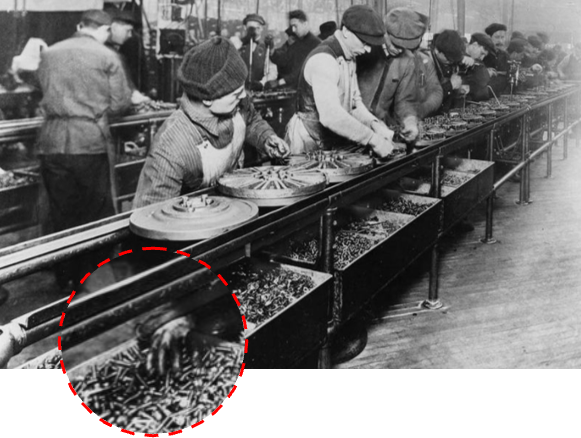
The way parts are fed hasn't fundamentally changed since the Industrial Revolution.
- 1870
2nd Industrial Revolution
Mass production introduced — manual labor
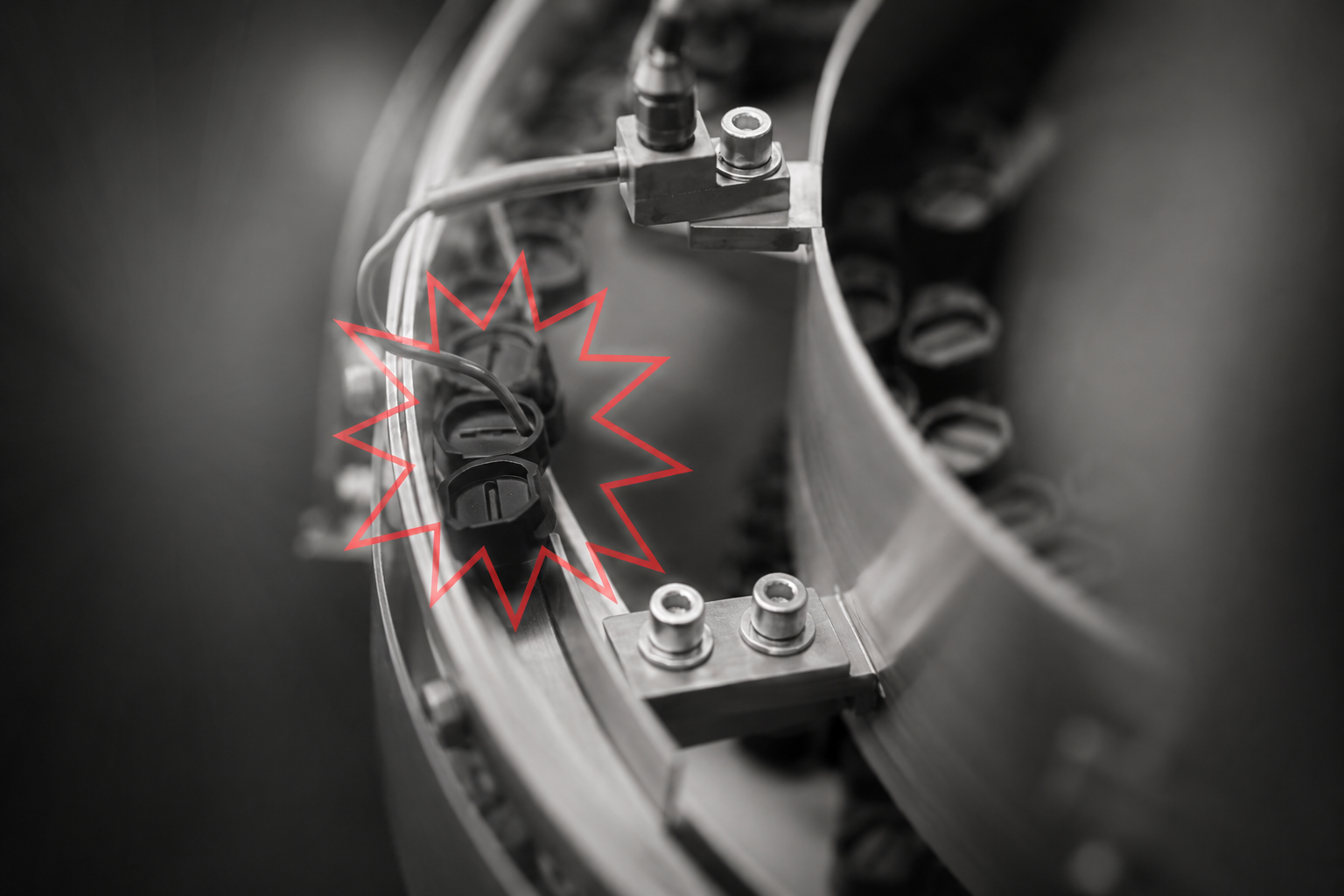
- 1960
3rd Industrial Revolution
Bowl feeders & vibratory feeders developed
Even now
Still a feeder, or a person
Low-mix, high-volume
Solvable with bowl/vibratory feeders
High-mix, low-volume
People align by hand — an automation gap
NEW SOLUTION NEEDED
Switch in under 5 minutes even when the model changes,
and feed high-mix parts without an operator.
A flexible feeding system fills this gap — vibratory spreading + vision recognition + recipe changeover — with no part-specific tooling and no feeder jamming.
SOLUTION
Unmanned automation that replaces production labor
Picking piled-up parts one by one, like a person — the robot replaces the arm, camera vision replaces the eyes, and unified control replaces the judgment.
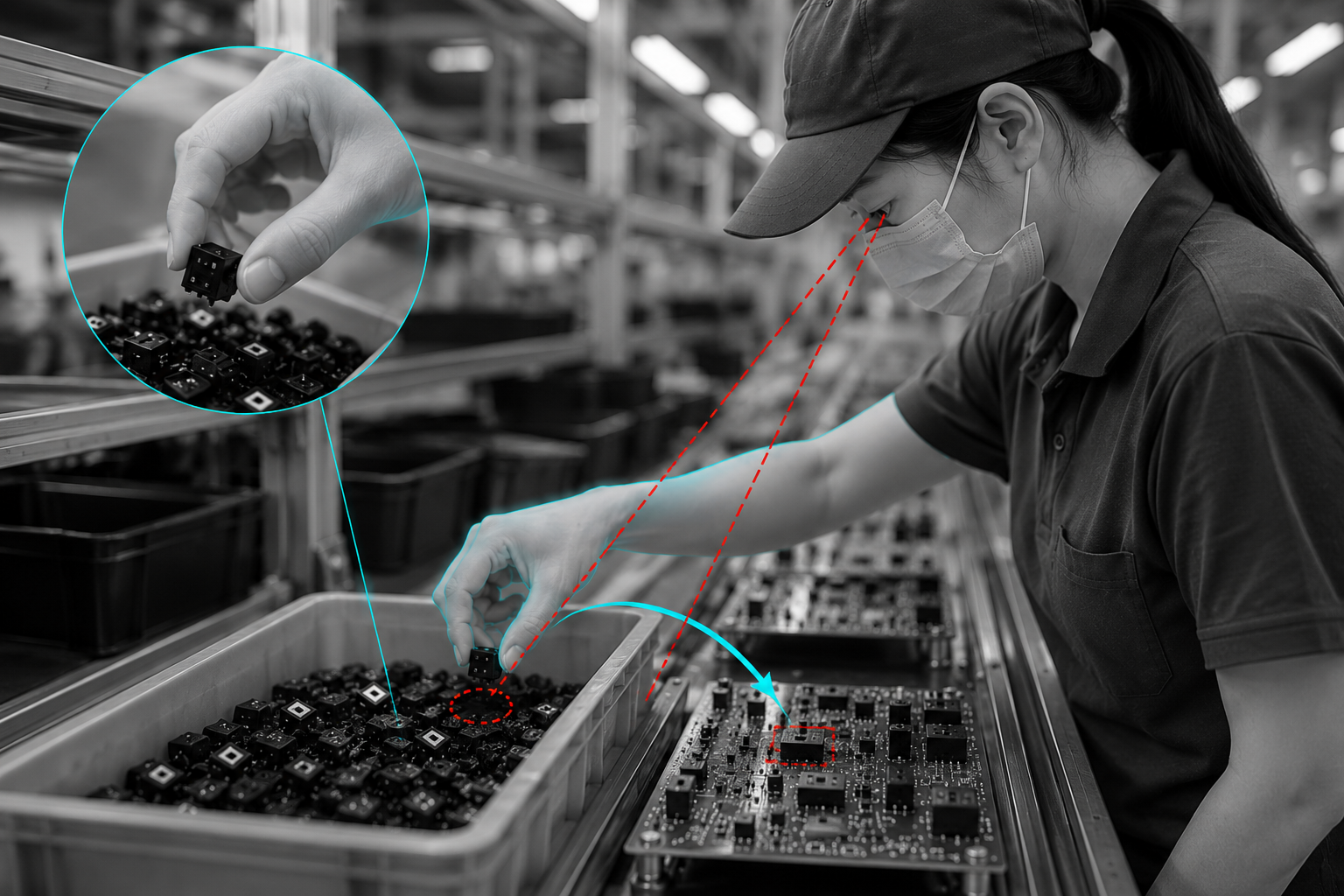
A robot for the arm
Repeats pickup and transport precisely using matched coordinates.
Camera vision for the eyes
Recognizes part position and pose in real time and transfers coordinates.
Unified control for the intelligence
Automates model changeover and condition management with a single recipe.
PRODUCT LINE · PROCESS
Bulk → pickup: the 5-step flow and the products behind it
Standardized parameters at each step are saved as a recipe and switched together when the model changes.
-
 1 Bulk
Start from parts randomly mixed together.
-
 2 Feed
Supply to the feeder via hopper/tray to keep a steady amount.
-
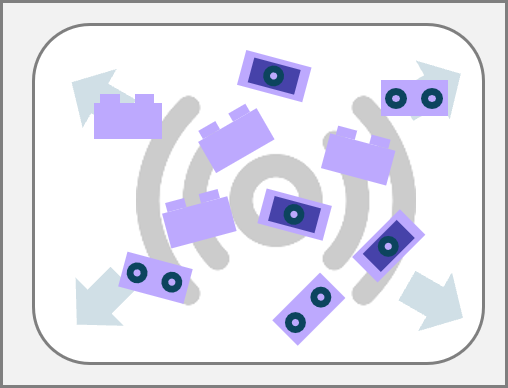 3 Spread
Spread out with vibration patterns to reduce overlap and interference.
-
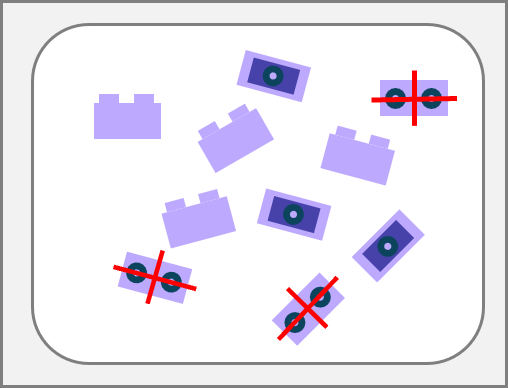 4 Detect
Vision computes pose, center coordinates, and interference.
-
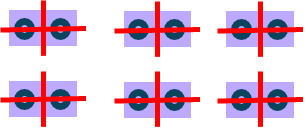 5 Pick & Place
The robot picks and places using matched coordinates.
PRODUCT LINE
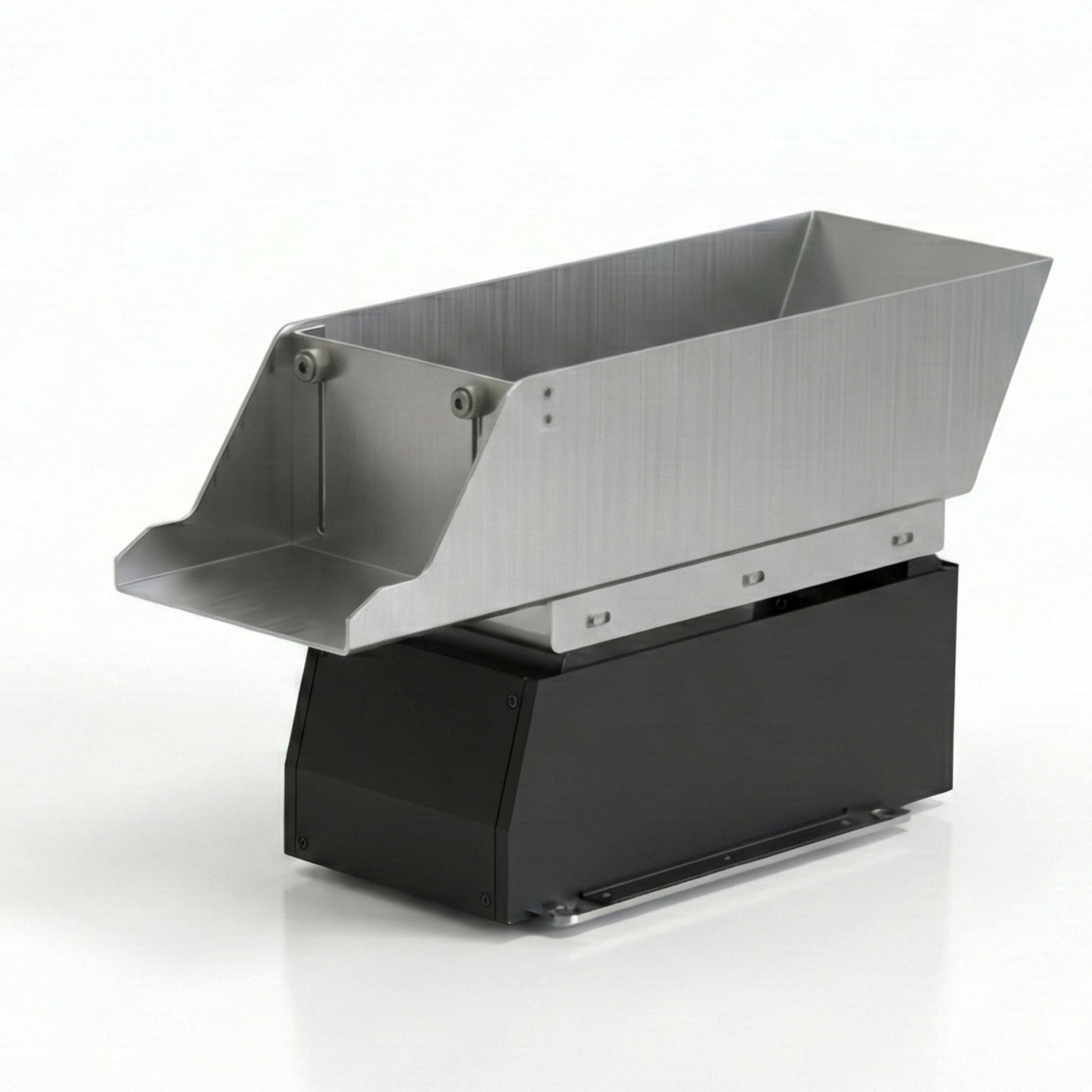
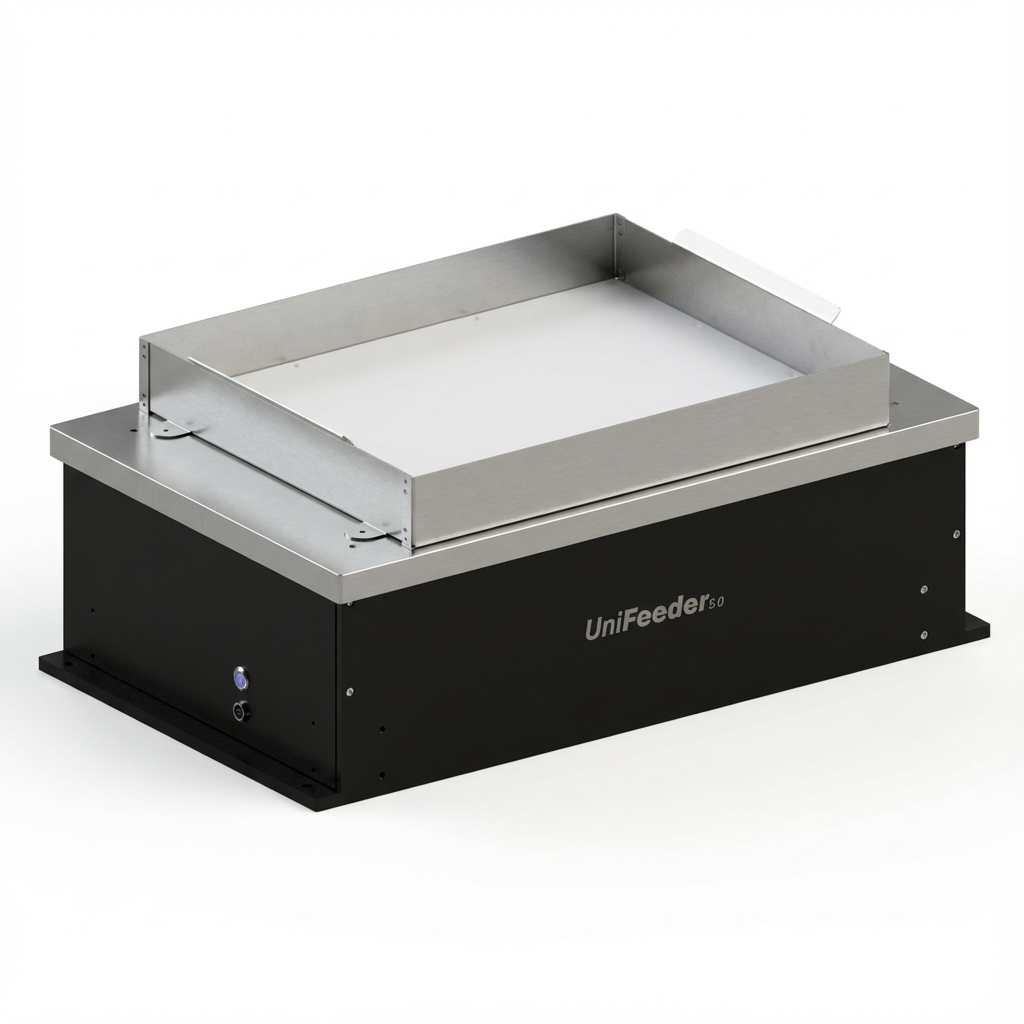
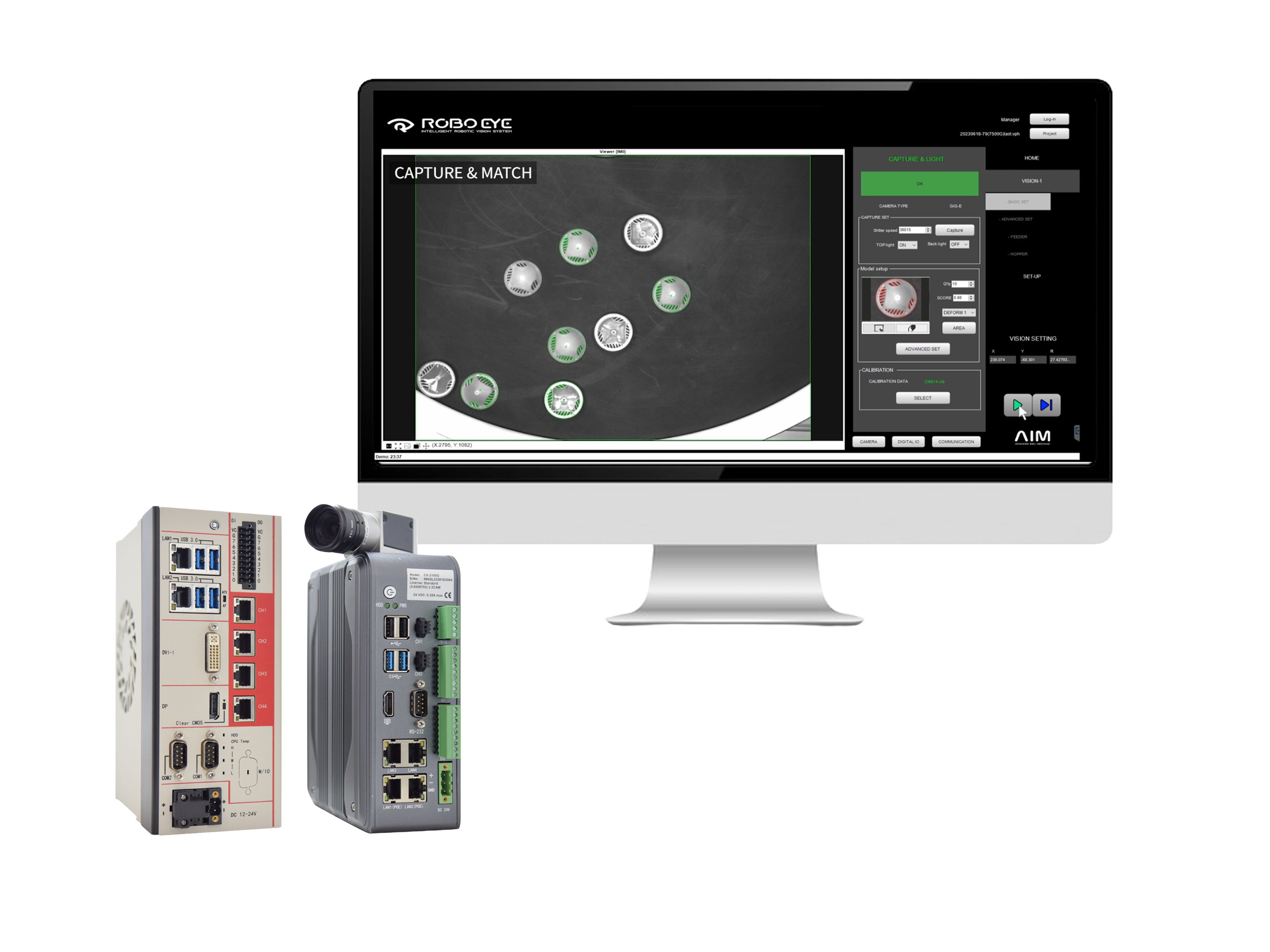
The product family behind our flexible feeding system
BENEFITS
Key benefits of a flexible feeding system
Why manufacturers move from part-specific bowl feeders to a vision-guided flexible feeding system.
High-mix changeover
Switch models in under 5 minutes with a single recipe — no new feeder tooling per part, so one flexible feeding system covers many SKUs.
Micro & hard-to-feed parts
Handles 0.5–180 mm parts — including thin, rubber, and spring components that a traditional vibratory bowl feeder struggles with.
Vision-guided precision
Vision recognition with ±0.05 mm coordinate matching, integrated across 22+ robot brands for reliable pick-and-place.
Stable, jam-free supply
Flat-surface spreading removes the jamming and part wear of conventional feeders, keeping the flexible feeding system running without stops.
SYSTEM
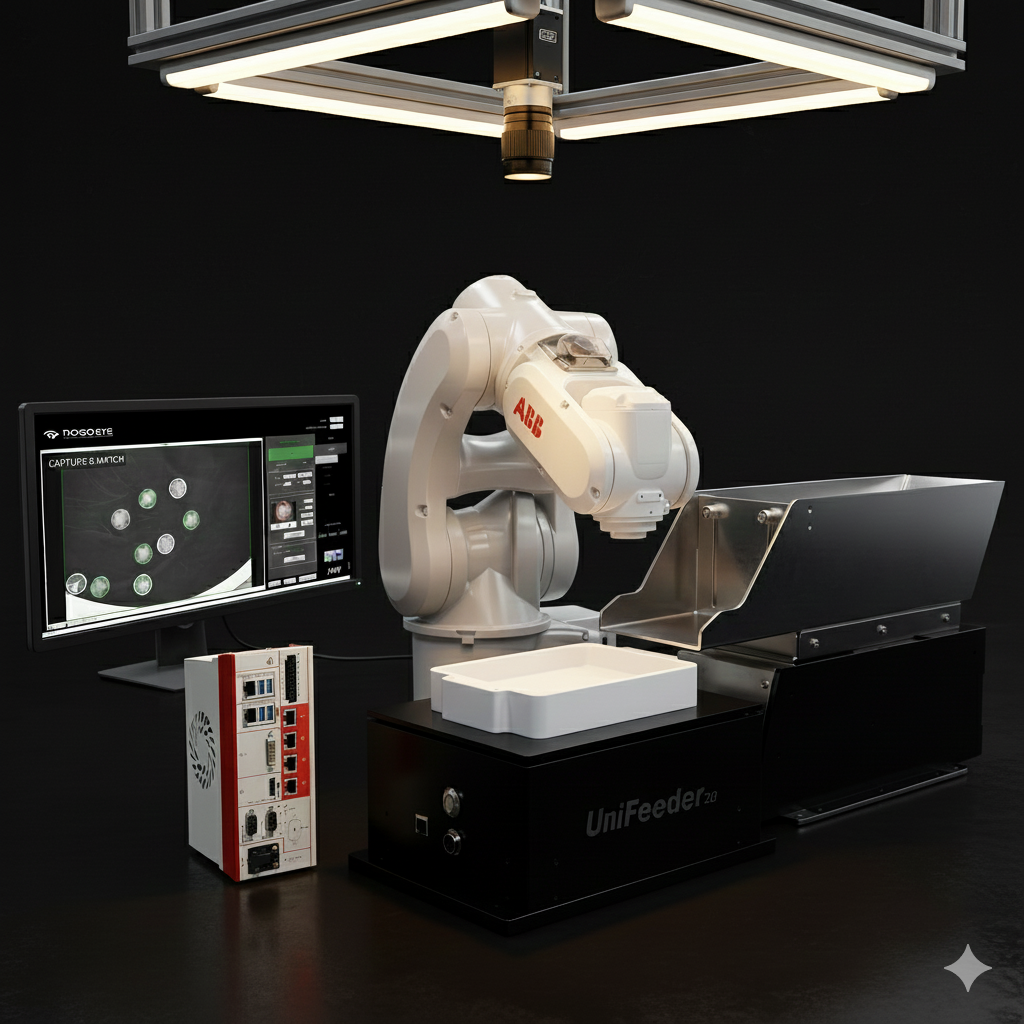
System configuration
A flexible feeding system composed of software, vision, and feeders. See detailed specs on each product page.
DEMO
See the flexible feeding system in action
Vision-guided pickup from a flexible feeder — recognition, coordinate matching, and robot pick-and-place in one flow.
CASE STUDIES
Proven on real production lines
Applied on real parts, robots, and lines.
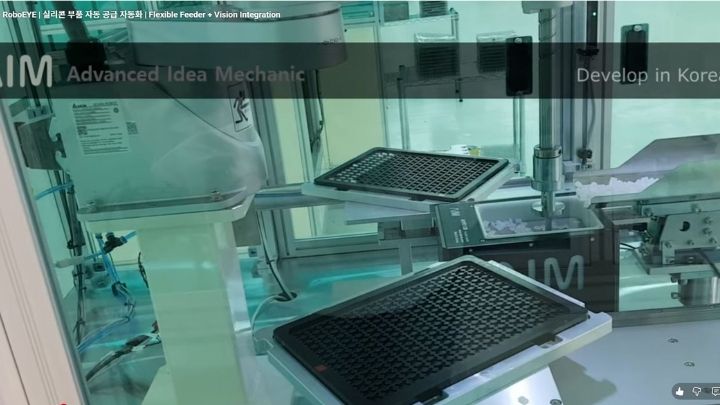
Silicone part tray auto-feeding with AIVE + RoboEYE (4×6 mm)
Electronic-parts manufacturing · Undisclosed (silicone parts)
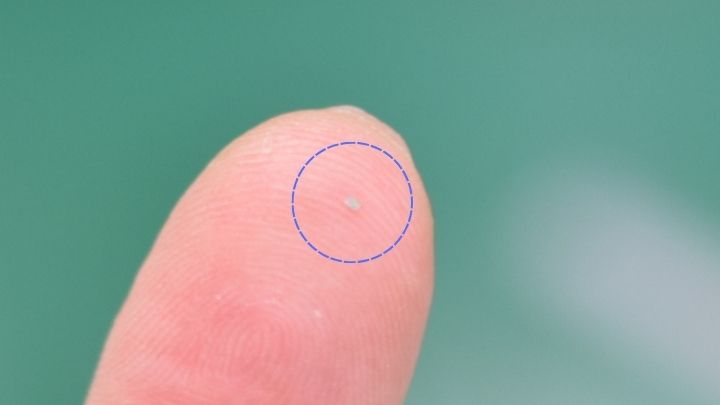
Ultra-small SMD reel-taping automation with IAI robot, AIVE & RoboEYE
Electronic-parts manufacturing · IAI Robotics
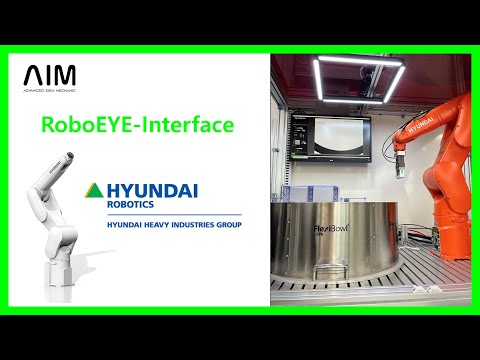
Hyundai Robotics HH7 case study | Flexible feeder & machine-vision automation
Automotive parts · Hyundai Heavy Industries
FAQ
Flexible feeder FAQ
- What is a flexible feeding system?
- A flexible feeding system feeds a wide variety of parts on one machine by standardizing spreading (vibration/rotation), recognition (vision), and coordinate matching (calibration). Unlike a part-specific bowl feeder, it switches between models with a recipe instead of changing tooling — ideal for high-mix, low-volume production.
- How is a flexible feeder different from a bowl (vibratory) feeder?
- A bowl feeder uses part-specific tooling to feed one part at high volume. A vision-guided flexible feeder feeds many part types on one machine without dedicated tooling, and handles thin, rubber, spring, and other parts that bowl feeders struggle with. The more SKUs you run, the more a flexible feeder pays off.
- What part sizes and shapes can it handle?
- AIM's flexible feeding system handles roughly 0.5–180 mm parts. Vibration-type (UniFeeder/AIVE) and rotary-type (FlexiBowl) are selected to match the part, covering micro electronics through medical and automotive components. We pre-validate spreading, recognition, and matching with your real part samples.
- How long does product (model) changeover take?
- Vision, feeder, and robot conditions are saved as a recipe, so changeover is a single recipe-ID selection. Standard cells target switching in about 5 minutes, with no part-specific tooling to swap — raising utilization on high-mix lines.
- Does it integrate with our existing robots and PLCs?
- Yes. Based on integration experience with 22+ robot brands and PLCs — Hyundai, ABB, FANUC, YASKAWA, UR, KUKA and more — we configure vision coordinate transfer and calibration. All recipes and equipment control run on the AimFactoryCore platform.
- How do I get pricing or a quote?
- Configuration depends on part types, target cycle time, installation space, and robot/PLC environment. Share your part information and we'll review a suitable configuration and timeline, then quote. Request a consultation via the contact page.
START
Will it work with our parts? — Let's review it together.
We review spreading, recognition, and matching feasibility with your actual part samples and propose a suitable configuration.